Adam Ang
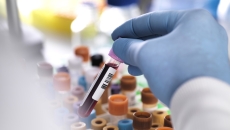
It has demonstrated high accuracy in detecting pancreatic cancer by extracting and analysing 260,000 metabolic signals from just 500 microlitres of blood serum.

Funded by the Queensland government, a University of Queensland project is developing a VR program for practising safe falls for the first time among patients with spinal cord injury.

Also, Wellumio has received $4 million in pre-Series A funding to further develop its portable, AI-augmented brain scanner.
Also, an Indian sleep tech startup is headingo the United States after raising $3 million in seed funding.
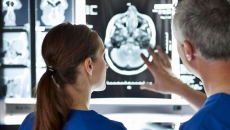
A neurologist's startup has developed a foundation model, based on 60,000 hours of brain wave records, which reportedly achieved 95% accuracy in identifying epilepsy biomarkers.
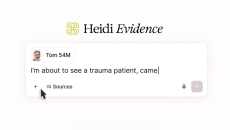
Rivalling OpenEvidence and DoxGPT, Heidi’s latest offering, Heidi Evidence, sets itself apart by allowing clinicians to upload their own sources and documents.
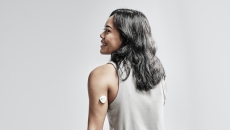
Extensive clinical validation and deployment are what remain to make it routine, according to University of New South Wales Scientia Professor Justin Gooding.
Developed by Shenzhen-based Yuanhua Tech, the Chinese technology can be deployed in low-resource and remote settings.
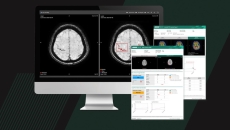
Also, Ubie is collaborating with Mayo Clinic on a new unified patient digital front door.
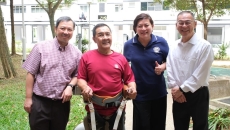
A community trial has shown that the data-driven, fall-detecting wearable robot developed at Nanyang Technological University requires less physiotherapist assistance.