Medical devices

Also, Wellumio has received $4 million in pre-Series A funding to further develop its portable, AI-augmented brain scanner.
Developed by Shenzhen-based Yuanhua Tech, the Chinese technology can be deployed in low-resource and remote settings.
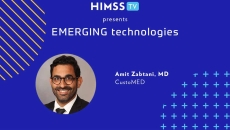
Emerging Technologies
Dr. Amit Zabtani, an orthopedic surgeon at UCLA and cofounder and CMO of CustoMED, says the company uses 3D printing to create patient-specific instruments based on an individual’s anatomy, enabling more precise positioning during surgery.
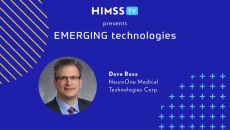
Emerging Technologies
The CEO of NeuroOne, Dave Rosa, discusses the company's minimally invasive brain-computer interface thin-film, flexible electrode technology, its successes in patients with seizures and the potential benefits across a range of neurological conditions.
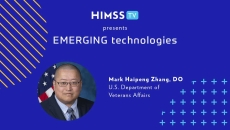
Emerging Technologies
Acting assistant under secretary for health at the U.S. Department of Veterans Affairs at the U.S. Department of Veterans Affairs, Dr. Mark Zhang, discusses the VA's research into 3D-printed biological material for veterans.

Despite tightening barriers to entry over the years, Europe and the US are still key to global expansion for Korean startups, says Sky Labs CEO Jack Byunghwan Lee.
Amy Tucker of Advocate Health's Sanger Heart & Vascular Institute explains what it takes to move to a scalable platform that improves clinical administration and patient care.
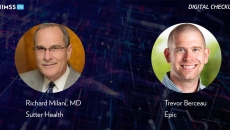
Sutter Health's Dr. Richard Milani and Epic's Trevor Berceau talk about Sutter's chronic care program, which integrates readings from remote monitoring devices into the EHR to give doctors continuous insight into patients' conditions.
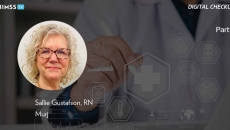
Sallie Gustafson, Murj's director of medical affairs, says Emory used smart remote monitoring technology that integrates with EHR systems to increase billable remote cardiac services by 52% despite minimal patient growth.
According to Sallie Gustafson, RN, Murj’s director of medical affairs, strict CMS billing rules may negatively impact practices’ recurring revenue from their remote cardiac monitoring services.